
After a master’s in Organic Agriculture with a specialization in Agroecology, I still wasn’t sure I could differentiate a tomato seed from a strawberry seed. I wasn’t confident I could clearly explain the process from seed to seedling. I didn’t really understand the cycles.
This isn’t to say I had never planted anything before. I have vivid memories of my father and I starting a small garden in our front yard in Rwanda. We grew watermelon, and I remember being completely fascinated by the way the plant climbed. One of those core memories that sticks. But by the time I finished my master’s, that version of me felt very far away.
So it only felt right to return to the earth.
These are the three farms that changed my life, or rather, the three farms that solidified this path for me. I volunteered on all of them.
1. Monastère Notre Dame de Bonne-Espérance
(Echourgnac, France)
I chose this farm for the simplest reason. I saw a YouTube video where someone said that if you ever had to choose just one farm to visit, it should be this one. Decision made.
As a Black woman, I think twice about where I travel. Will I be welcomed? Will I be stigmatized? Religious spaces sometimes feel safer, though to be fair, it’s always a gamble and you hope for the best. My confidence grew when I heard Sister Elise Mariette say they accept everyone.
My arrival in Echourgnac was hectic. I landed in Paris after a couple of weeks in Mali with a phone that barely worked. I had to switch quickly to a spare phone I was lucky to have with me, one that didn’t take pictures. So I have no photos from those two weeks, except the ones my fellow volunteers took. I took the train to Echourgnac, where I was picked up alongside other volunteers, including a Muslim couple living in Paris at the time.
How freeing it was to live with the sisters and follow their rhythm, each day punctuated by several prayers marking the birth and death of Christ. The sisters dressed modestly, heads covered and loose-fitting clothes. It reminded me so much of Islam, the rhythm of prayer throughout the day and the modesty. I felt deeply at ease. I had space to pray, and I was also invited to participate in some of their rituals.
In between prayers, we tended the gardens or chatted with the sisters who made jam from the harvest and cheese from the milk. All of this happened at the top of a mountain, with the forest as a backdrop. One exceptional day, they opened their private quarters to us and we helped with tasks inside. How exceptional it was to witness balance between the spiritual and the physical. How exceptional it was to see that something I had yearned for so deeply was, in fact, possible.
2. Pàmies Vitae
(Balaguer, Spain)
I spent three months here.
I don’t even know where to begin.
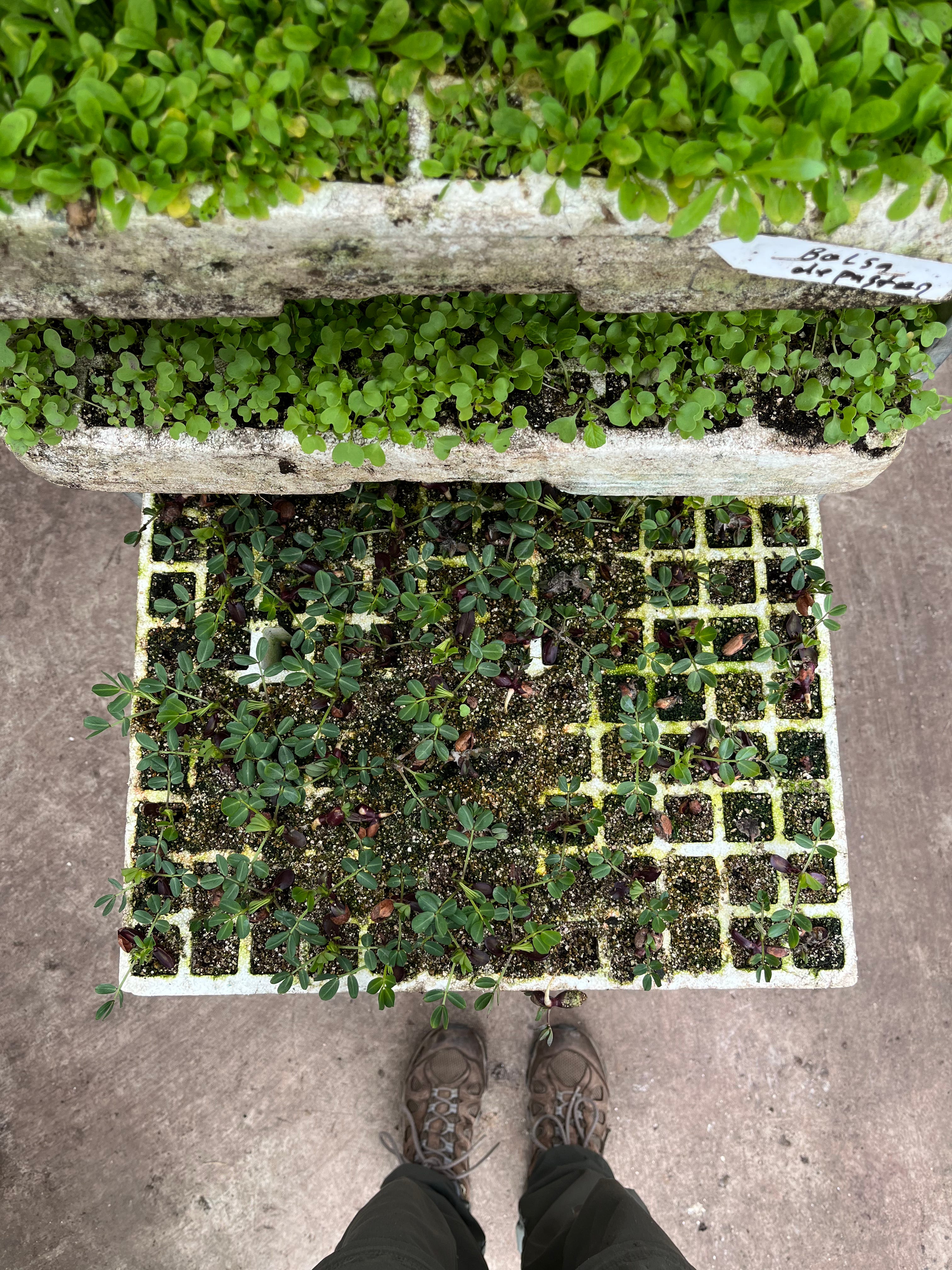
A longer stay was essential on this journey, mainly because I finally got to understand plants by repetition. I planted hundreds of seeds and watched them return as seedlings. I repotted, replanted, transplanted, again and again, day in and day out.
All of this happened under the watchful eye of my “work dad,” Aziz, a generous Moroccan man. He spoke Spanish and Arabic. I spoke English, French, and Bambara, and I was brushing up on my Spanish. We met each other halfway and landed on generosity and understanding.
He would bring bread his wife baked for me. Later, he invited me to his home to meet his family. I felt held throughout the learning process, held by people, by routine, by the land.
3. My Uncle’s Farm
(Bamako, Mali)
Perhaps my favorite thing about some of the organic farms I’ve visited in Mali is this. While their neighbors have cut down nearly all their trees, these farmers have maintained theirs and planted even more.
My uncle’s farm is one of those places.
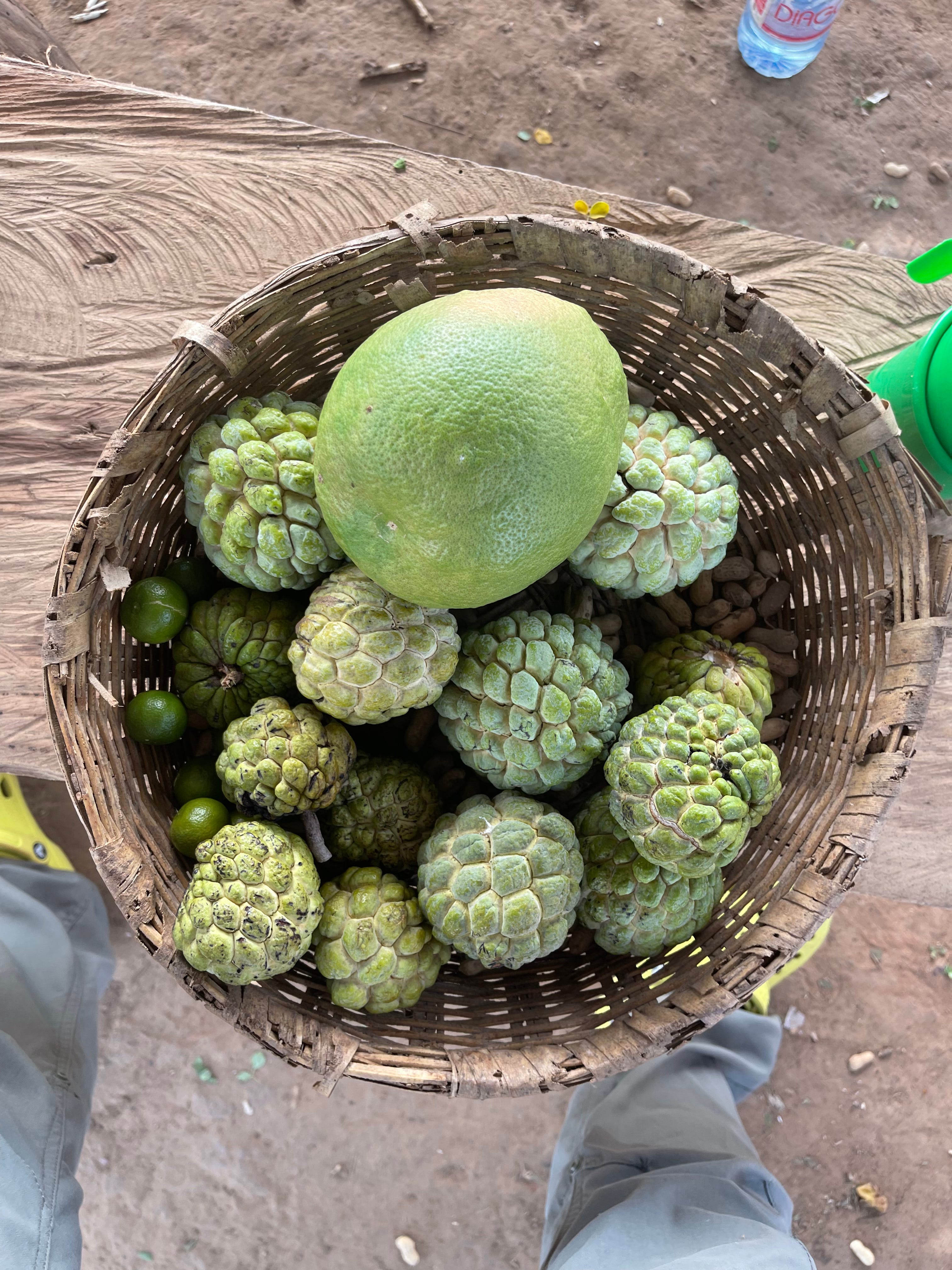
An absolute oasis, especially as desertification and deforestation continue moving further south. He has hectares and hectares of citrus trees. As we walked through the farm, he picked fruit straight from the trees and handed it to me.
Around lunchtime, we returned to the center of the farm to share one of my favorite meals to this day, peanut and moringa stew with guinea fowl, served with yellow corn couscous. Everything came from the farm. To crown the experience, he sent us off with pasteurized milk.
I wouldn’t have it any other way.
I was only there for a day, but by the end of it, I didn’t want to leave. I dreaded returning to the city, where there were fewer trees and the air felt heavier, less fresh.
The way I was treated, and the plants I was in communion with, reaffirmed the power of community rooted in land, and how it heals and frees us spiritually, physically, and emotionally. It is this understanding of land through plants, people, and place that makes me a better host for nāfolo. My learning journey is far from finished, but I look forward to reflecting what I have learned in this new season of nāfolo called keneya (health in bambara).
And so I wonder, which places have changed you the most?


